Date/Time Date(s) - 24/01/20243:30 pm - 4:30 pm
Location Physics and Astronomy Department
Dr. Jess McIver (she/her) Canada Research Chair in Gravitational Wave Astrophysics Assistant Professor, University of British Columbia https://phas.ubc.ca/users/jess-mciver

Title: New discoveries with gravitational-wave astrophysics
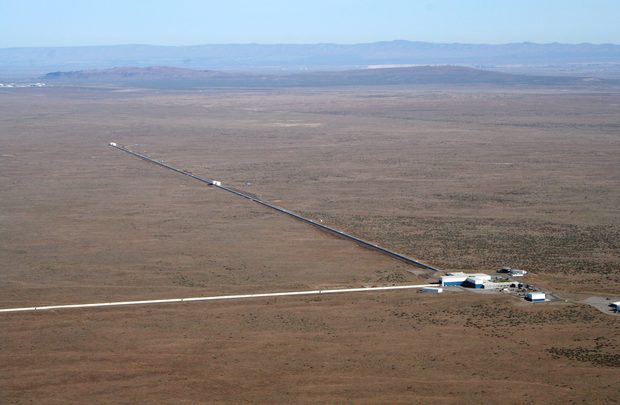
Abstract: In the last six years, the field of gravitational wave astrophysics has grown from a groundbreaking first discovery to revealing new populations of black holes and neutron stars through distant cosmic collisions, which has provided new insights into extreme spacetime curvatures, cosmology, and ultra-dense matter as well as the origin of heavy elements. I’ll give an overview of the current Advanced LIGO detectors and summarize recent results from the LIGO-Virgo-KAGRA network and their wide-reaching implications. I’ll close with prospects for the future of multi-messenger astrophysics with gravitational wave detectors on Earth and in space.
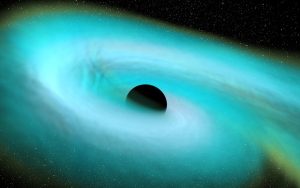
A simulation of a NSBH merger: Image from a MAYA collaboration numerical relativity simulation of a neutron star-black hole (NSBH) binary merger, showing the disruption of the neutron star. Credit: Deborah Ferguson (UT Austin), Bhavesh Khamesra (Georgia Tech), and Karan Jani (Vanderbilt University). https://www.ligo.caltech.edu/image/ligo20210629a
Building Up Black Hole Mass: This artist’s concept illustrates a hierarchical scheme for merging black holes. LIGO and Virgo recently observed a black hole merger with a final mass of 142 times that of the sun, making it the largest of its kind observed in gravitational waves to date. The event is thought to have occurred when two black holes of about 66 and 85 solar masses spiraled into each other and coalesced. Theoretical models indicate that nature is not likely to form black holes of this heft; in particular models identify a range of masses between 65 and 120 solar masses, called the “pair instability mass gap,” in which it is thought that black holes cannot be formed by a collapsing star. So how did the two merging black holes observed by LIGO and Virgo originate? Scientists think that these black holes may have themselves formed from the earlier mergers of two smaller black holes, as indicated in the illustration. Image credit: LIGO/Caltech/MIT/R. Hurt (IPAC). https://www.ligo.caltech.edu/image/ligo20200902e